

EDITOR’S NOTE: A University of Florida faculty member and Nassau County Extension Horticultural Agent, Rebecca Jordi addresses some of the questions she receives about landscaping and gardening in northeast Florida, in GARDEN TALK. The Extension also offers helpful clinics throughout the year, providing assistance to local gardeners on Amelia Island and in the surrounding areas of Nassau County, Florida.
—– GARDEN TALK —–
QUESTION: Will you give me some suggestions of salt tolerant plants? NC
JORDI: Some possible salt tolerant choices of shrubs are Pittosporum, Yaupon Holly, Lantana, or Silverthorn (Elaeagnus pungens). Ask your local nursery about dwarf varieties which would be a good choice to grow in pots. There are several varieties of Lantana such as ‘Golden mound’ which is yellow. are two others, one with white flowers and the other with purple flowers, which are commonly found at local garden centers and plant nurseries. Any of these three will attract adult butterflies as they are searching for nectar.
Smaller, salt tolerant plant choices (reaching heights of only 2-3 feet) are Coontie, Lirope, Purslane (Portulaca spp), or Algerian ivy. You might try Beach Morning Glory or Cape Honeysuckle which could be trained to climb a trellis. Both of these would attract hummingbirds.
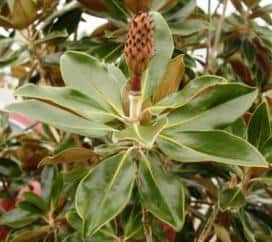
Palms for north Florida would be European, Canary Island Date, Pindo, Lady, and Windmill. Moderately salt tolerant trees are Magnolia, loquat, Chaste, and Dahoon holly.
For more ideas and specific information about growth habits of these plants check out the University of Florida website: http://edis.ifas.ufl.edu/pdffiles/EP/EP01200.pdf
QUESTION: How much lime should I add to my lawn and should I do it now? WA
JORDI: This is a repeat question so I am pulling up one of my old answers. Please, please do not add lime to your Florida yards unless you have had a soil test that indicates you need it. I have had hundreds of soil test results and only one person has ever had to add lime. I know it is a common practice in northern states to add lime to lawns, but our lawn grass prefers an acid soil (low pH). Liming the yard raises the pH, which places undue stress on the lawn’s ability to absorb important nutrients and minerals. If the pH is too high, it is possible to kill the grass completely.
It scares me when I go to garden centers and see large pallets of lime that get shorter and shorter each time I visit. Someone is buying this stuff by the bag full and it should not be the person caring for the lawn. Lime is an important part of vegetable gardening but not lawns. Have I beaten that dead horse enough?
Folks can submit a soil sample to our office (either in Callahan or Yulee) in a paper bag and I will run a pH test free of charge. Please submit only one or two samples as each sample takes about 30 minutes to process and I do not have staff to do this for me. A full nutrient analysis can be run by the University of Florida for a $7 charge per sample, which will include a pH test. Each office has soil test kits you can pick up during normal office hours. Call 904 548-1116, (904) 548-1182 for more information.
QUESTION: What is this white stuff under the leaves of my camellia? MM

JORDI: Camellias are blooming now and therefore we are paying more attention to them, which results in finding these insects more readily. The insect is tea scale.
It will take some hard work to manage these pests, eliminating totally will probably never happen. Notice the operative word is “manage.” You could take a wet paper towel to wipe of most of the insects, then apply horticulture oil (ultra fine works best) and use a soil drench of imidacloprid around the root area of the shrubs. Imidacloprid is the active ingredient found in several products made to control insects on trees and shrubs which generally is applied only once a year. Check your local garden centers for appropriate pesticides.
It will probably take more than one application of the horticulture oil to obtain control. Please follow the directions on the label. We want to do all we can to protect our pollinators and other beneficial insects. The photo shows tea scale damage to the top of the leaf.

Rebecca L. Jordi
University of Florida/IFAS
Nassau County Extension
Environmental Horticulture Agent III
543350 U. S. Highway #1
Callahan, FL 32011
904 548-1116 or 904 879-1019
http://nassau.ifas.ufl.edu